Puerto Iguazú at a glance
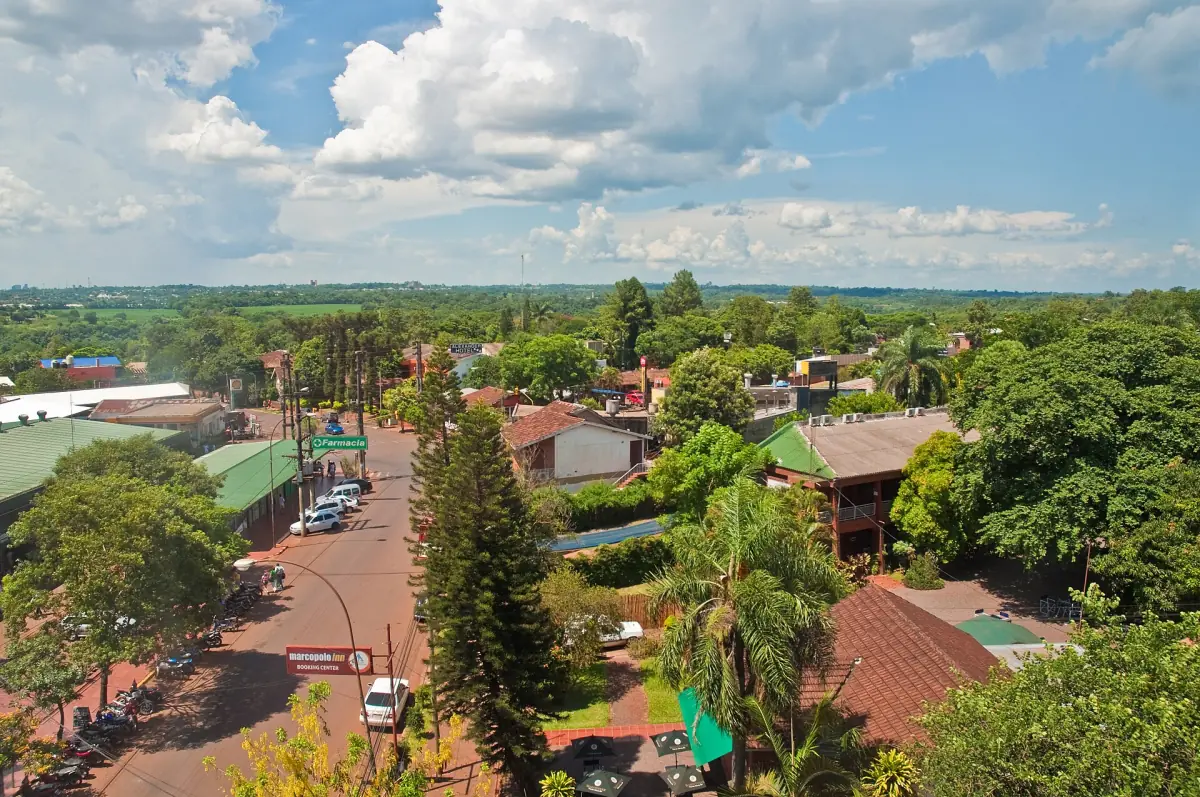
Puerto Iguazú is a town in the province of Misiones in northeastern Argentina. It sits where the Iguazú River meets the Paraná, and across those rivers you see Brazil and Paraguay. The Argentine side of the falls is about 18 km (11 mi) from the town's bus station, on the national roads RN 12 and RN 101.
The town center has banks, restaurants and accommodation in different categories. The municipality lists the Hito Tres Fronteras with a craft market, the port, La Aripuca, museums and Güira Oga as the main sights.
What to do in Puerto Iguazú
Sights in town, roughly in the order a visitor would see them.
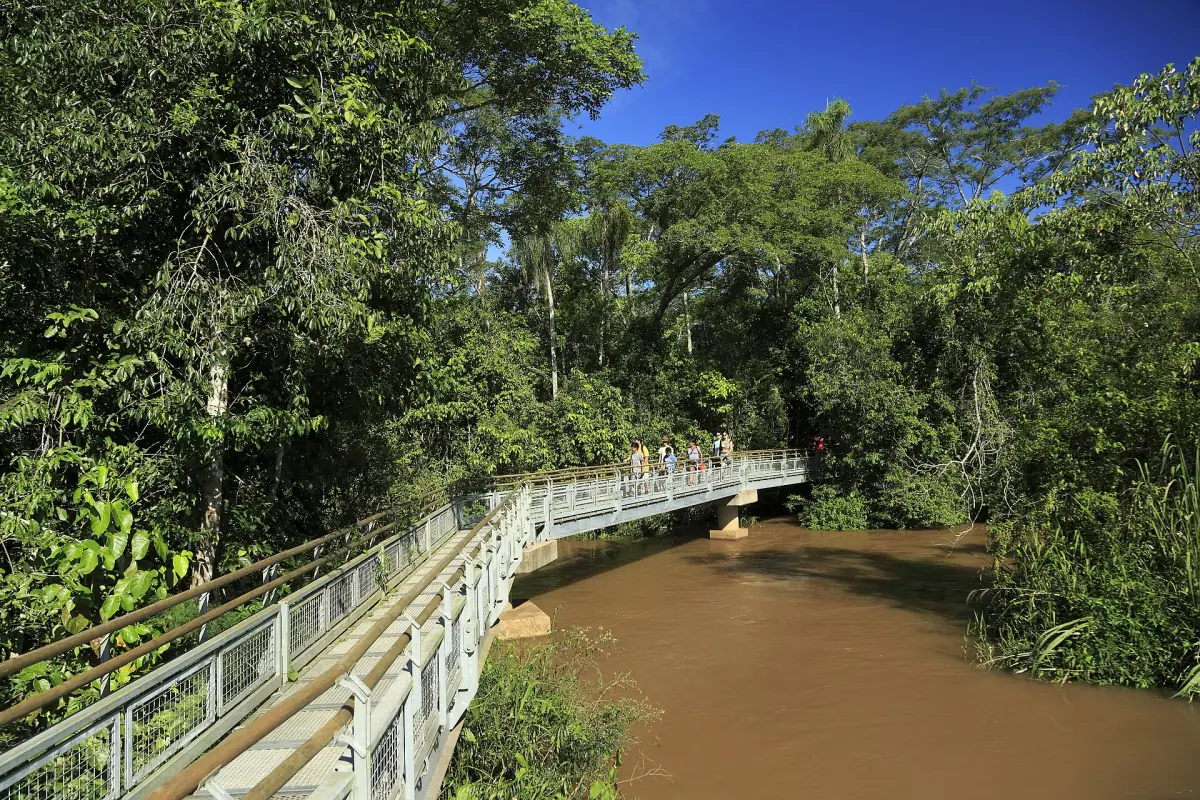
Hito Tres Fronteras
A viewpoint at the confluence of the Iguazú and the Paraná, with the three-country marker in front of the water. It is not the same as the paid leisure complex on the Brazilian bank, which the table below compares. A craft market is nearby.
Güira Oga
A guided environmental-education visit on a forest trail. Tickets are sold on arrival, and the hours and prices are below.
La Aripuca
Listed by the municipality among the town's sights. Check the current hours before you go.
Port and museums
The port and the local museums are listed by the municipality.
The falls
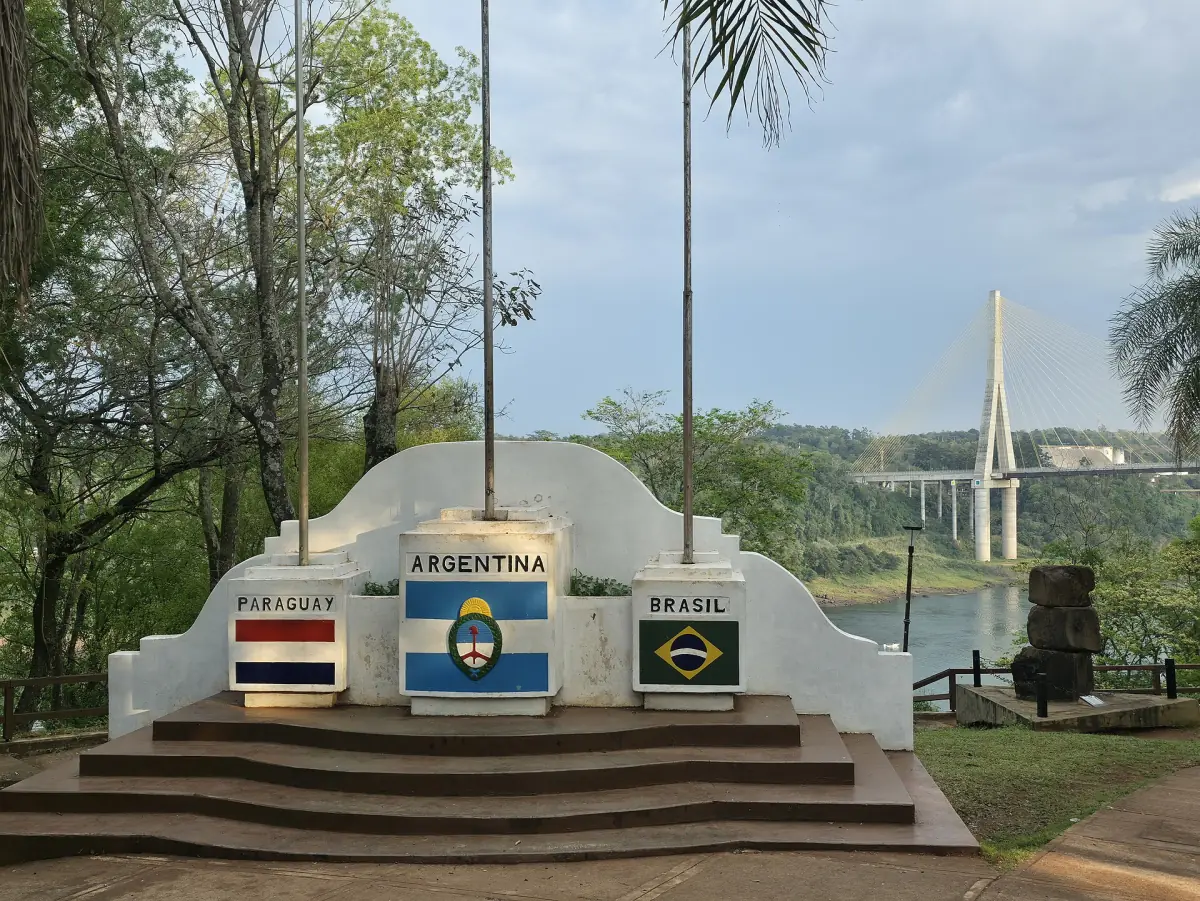
The park is not in town. Plan the Argentine side as a separate day.
Tours from Puerto Iguazú
Guided visits to both sides of the falls, boat rides and day trips from Puerto Iguazú, with live prices and availability.
Güira Oga: visiting hours and prices
Güira Oga offers a guided visit with an environmental-education focus. The tour takes about 1.5 hours. An ecotrailer takes the group through about 1 km of forest, and the walk is around 800 m. Tickets are sold on arrival, and groups of more than 10 people must reserve ahead.
- Hours: daily 09:30–18:00. The first guided tour starts at 10:00 and the last at 16:30, with groups leaving every 30 to 40 minutes.
- Getting there: the Río Uruguay local bus runs from the town center. Güira Oga is on RN 12 near km 1637 to 1638.
- Payment: cash, debit or credit card and digital wallets.
| Visitor | Price |
|---|---|
| General, adult | 35,000 ARS |
| General, child 6 to 12 | 25,000 ARS |
| Argentine adult | 28,000 ARS |
| Argentine child | 20,000 ARS |
| Misiones resident, adult | 16,000 ARS |
| Misiones resident, child | 10,000 ARS |
Rates as listed by Güira Oga, 2026. Retirees with proof pay 20,000 ARS and residents of Iguazú pay 10,000 ARS.
Hito Tres Fronteras and the Brazilian Marco compared
Both look at the same meeting of the rivers, from different banks.
| Hito Tres Fronteras (Puerto Iguazú) | Marco das Três Fronteiras (Foz do Iguaçu) | |
|---|---|---|
| What it is | Viewpoint and monument at the river confluence | Leisure complex with attractions |
| Entry | Ask on site for the current rate | 60 BRL from age 12 (57 BRL plus 3 BRL to the Iguaçu fund) |
| Reduced rate | – | 31.50 BRL for ages 6 to 11, free from 0 to 5 with an adult |
| Hours | Check locally | Tuesday to Sunday, usually 14:00–21:00 |
The Foz do Iguaçu page has the Brazilian side of town.
Getting to the falls and across the border
The Argentine park is about 18 km from the bus station. From the airport, the options are taxi, remis, a transfer or public transport. Bicycles have to stay in the parking area at the park. For the full routes from Buenos Aires, see our guide on getting to Iguazu Falls.
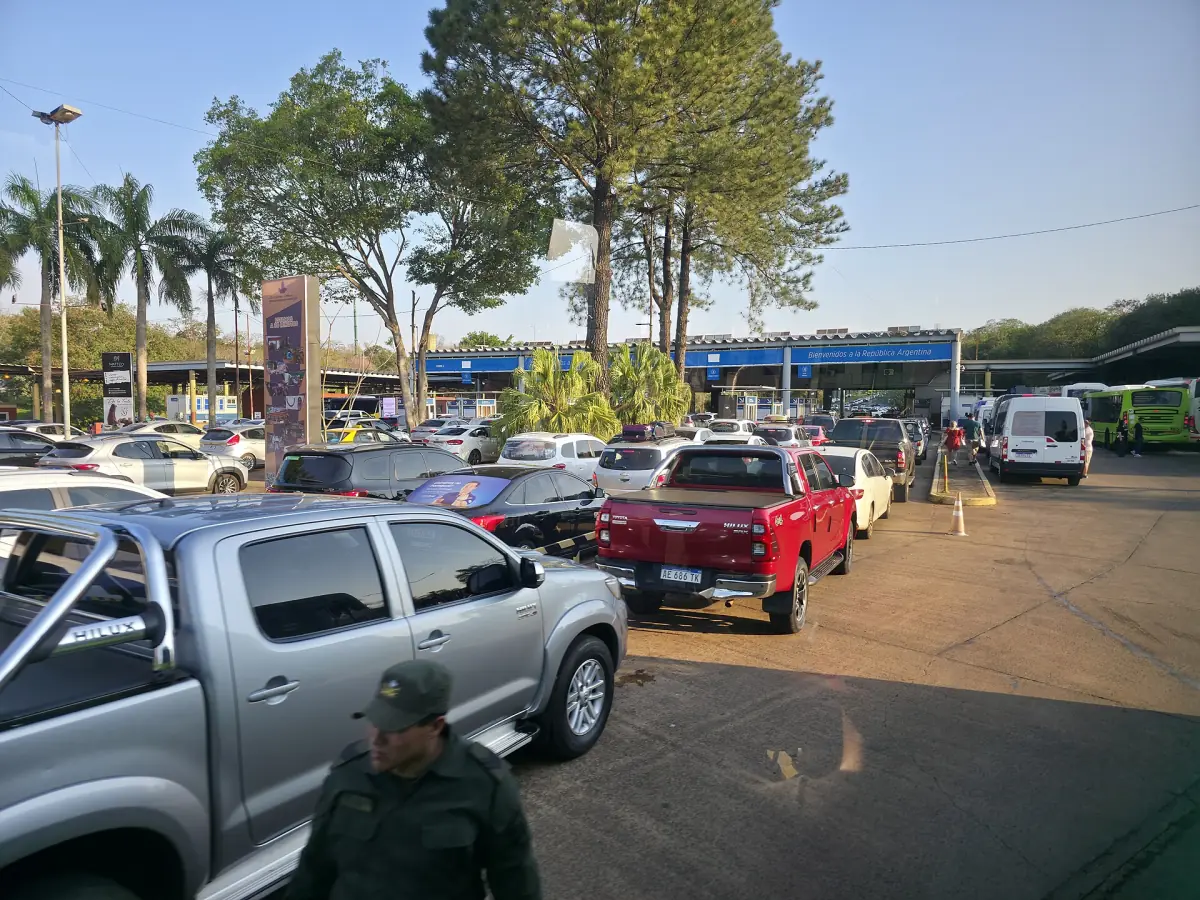
The crossing to Brazil runs over the Tancredo Neves bridge between Puerto Iguazú and Foz do Iguaçu. Entry rules depend on your passport. According to German Foreign Office guidance, you need a passport (not an ID card) for Brazil, valid for at least six months, and visa-free tourist stays last up to 90 days per six months. US citizens need a visa for Brazil again since 10 April 2025, and nothing indicates an exception for a day trip to the falls. For Argentina, German and US citizens can stay up to 90 days as tourists without a visa, and the German Foreign Office also asks for proof of travel health insurance.
Check the rules for your nationality before you travel. They change, and a crossing is only planned once your documents are in order.
Where to base yourself
Staying in Puerto Iguazú puts you close to the Argentine park and to the Argentine boat rides. Accommodation in town is sold in several categories, and the center has banks and restaurants within walking distance of each other. The alternatives are a hotel inside the park or a stay in Foz do Iguaçu, which is the better base for the Brazilian side. Our where to stay page compares the three areas.
If you stay for more than one day, the Argentine park gives 50 percent off a second visit within 72 hours. The details are on our tickets page.
Puerto Iguazú: frequently asked questions
How far is Puerto Iguazú from the falls?
The Argentine park is about 18 km from the town's bus station. The Brazilian park is on the other side of the border, in Foz do Iguaçu.
What is the Hito Tres Fronteras?
It is a viewpoint and monument at the point where the Iguazú meets the Paraná, with Brazil and Paraguay across the water. The nearby craft market belongs to the same stop.
What does the Güira Oga visit involve?
It is a guided tour of about 1.5 hours with an ecotrailer ride through about 1 km of forest and a walk of around 800 m. Tickets are sold on arrival, and groups of more than 10 must reserve.
Can I walk across the border to Brazil?
The official crossing is the Tancredo Neves bridge between Puerto Iguazú and Foz do Iguaçu. Whether you can enter Brazil depends on your passport and the current rules, so check them for your nationality first.
Do I need a visa for Brazil?
US citizens need a visa since 10 April 2025. Germans can enter for tourism with a passport for up to 90 days per six months. Confirm the current rule for your country before you go.
Where should I stay, Puerto Iguazú or Foz do Iguaçu?
Stay in Puerto Iguazú if the Argentine side is your main day, and in Foz if the Brazilian side is. See where to stay for the areas side by side.